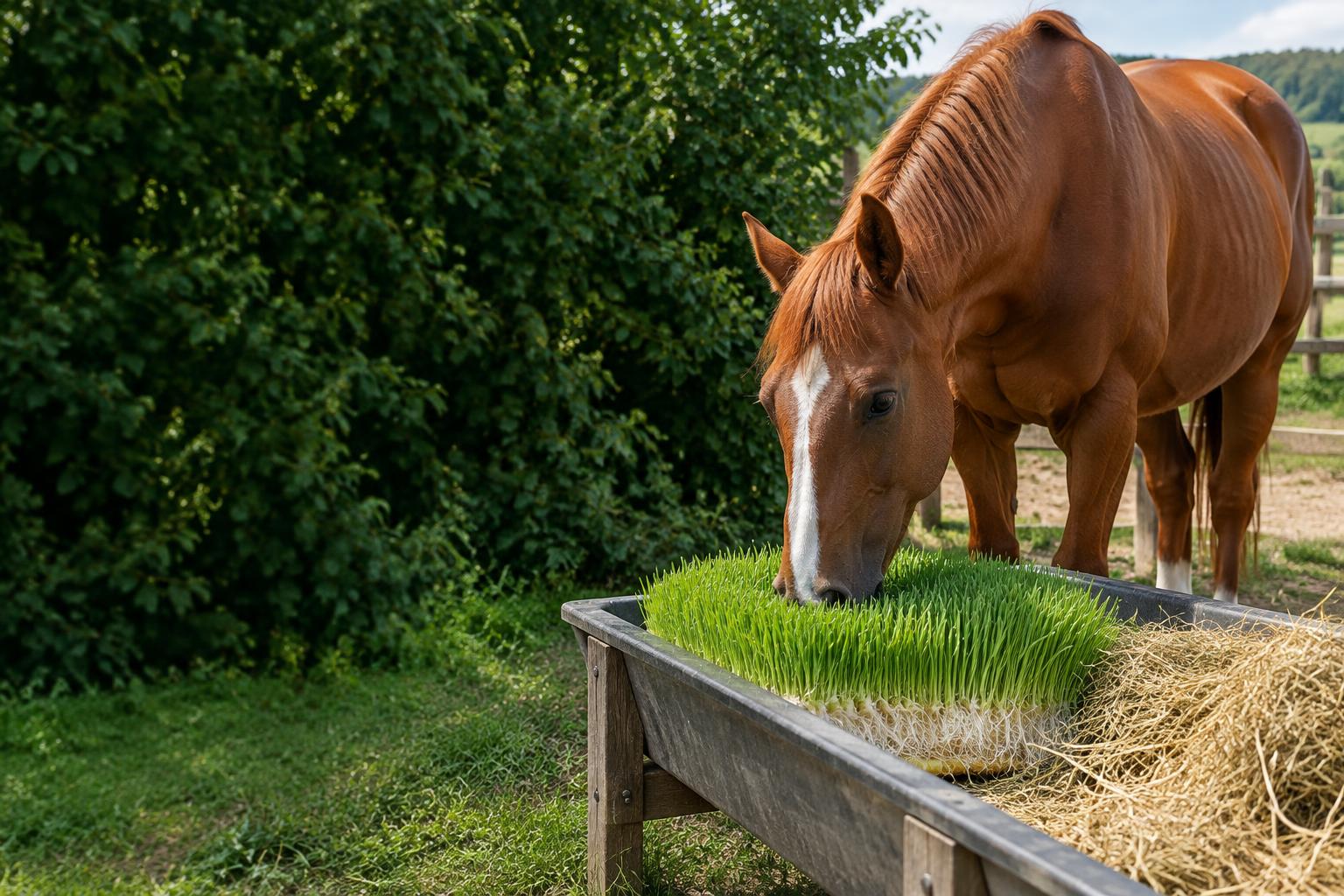
Horse eating fresh barley shoots with a root mat beside hay

Zelený Kůň · Fresh barley fodder for happier horses

Fresh barley fodder for horses

Fresh green nutrition, natural moisture and research insights to help you better understand your horse’s feeding.

Discover hydroponically grown barley fodder. Explore expert insights, the role of water in the ration and experiences from people interested in fresh horse feed.

Research made approachable

What does research say about fresh fodder?

Explore interesting research findings and expert perspectives on fresh fodder, barley and equine nutrition.

Fresh fodder brings water into the ration too

Hydration starts with the whole ration.

Fresh hydroponic barley fodder contains natural moisture. Feed-associated water counts towards total intake and is worth considering in everyday feeding.

Feed moisture does not replace unrestricted access to clean drinking water.

Illustrative horse photograph with barley fodder and hay

Water within feed

Fresh shoots have high water content. The precise amount requires analysis of the actual product.

Total daily water intake

Consider drinking and feed-associated water. Horses may adjust drinking when feed moisture changes.

Balanced everyday care

Hydration is one aspect of care. Always provide clean drinking water and a suitable ration.

More on water and horse feeding

People, horses and everyday feeding

Experiences in practice

Expert perspectives and genuine experiences from people interested in fresh horse feed.

Expert perspective · not a customer review

Fresh fodder moisture is a useful characteristic to consider alongside dry matter and the balance of the complete ration.

Katie Navarra · The Horse

An expert-led magazine article about hydroponic fodder for horses. It is not a controlled trial or an endorsement of Zelený Kůň.

The Horse · 6 October 2025 ↗
Share your experience

Do you feed fresh barley fodder to your horse? We would love to hear about your experience, feeding routine and how your horse accepts it.

What can fresh barley fodder offer?

Freshness · Moisture · Context

A fresh green component

Hydroponically grown barley shoots provide fresh plant material that can be considered as a supplementary part of a properly balanced ration.

Natural moisture

Fresh feed contains water and therefore differs from hay in weight and dry-matter concentration. This distinction matters when calculating a ration.

Plant nutrients

Barley contains nutrients whose actual amounts in harvested fodder depend on growing conditions and harvest stage.

Feed as part of the whole

Every horse has different needs. Fresh barley fodder must be assessed alongside hay, grazing, concentrates, mineral supplements and workload.

Read the hydroponic forage research review ↗

The review concerns ruminants; its results do not establish the same effects in horses.

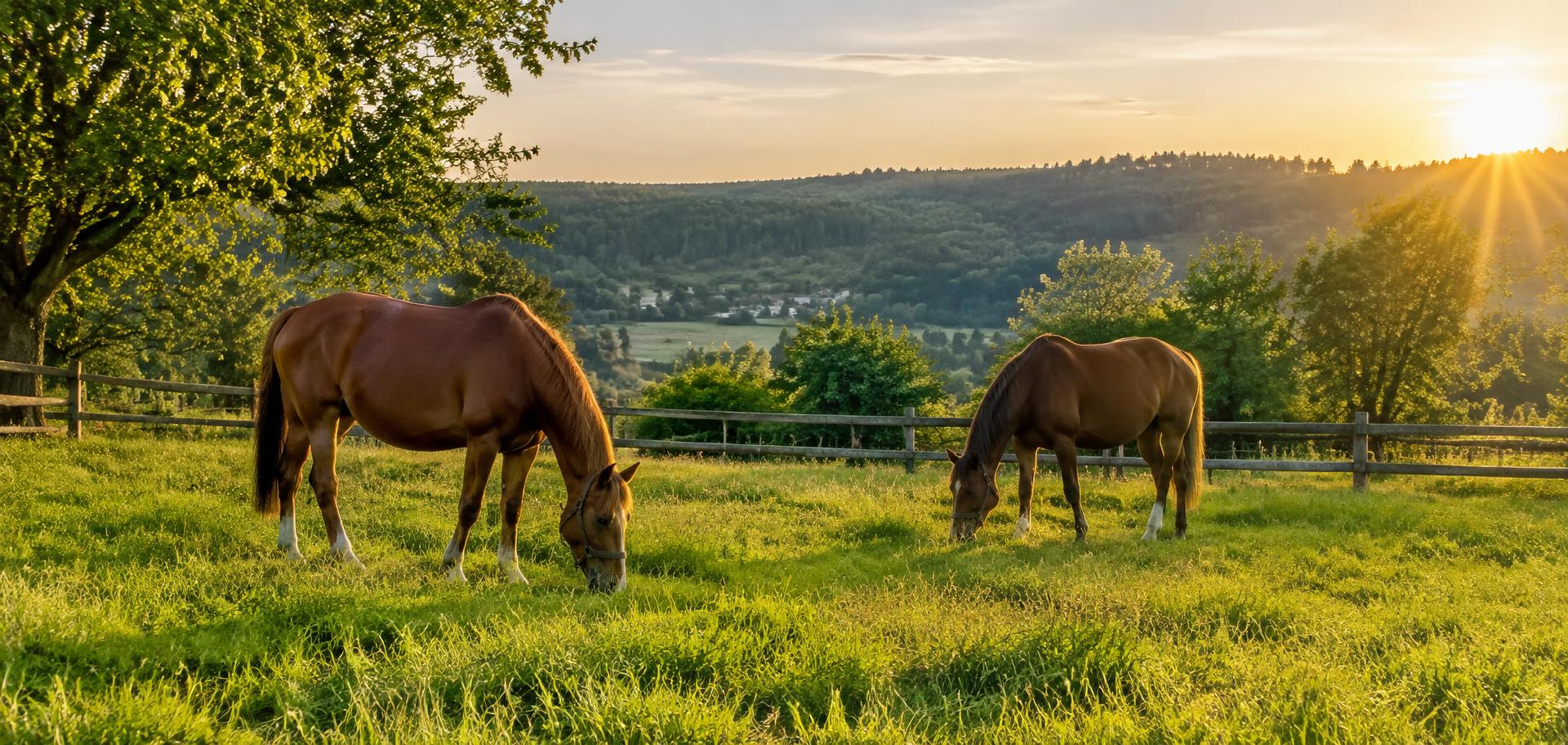
Illustrative photograph of horses grazing

Good feeding starts with good questions

Can fresh barley fodder replace hay?

It should not automatically replace hay, pasture or a balanced ration. High water content means a much lower dry-matter concentration per kilogram of fresh feed.

How much fresh fodder should I feed?

The amount depends on weight, workload, existing ration and laboratory-tested dry matter and composition. Plan suitable feeding with an equine nutritionist or vet.

Is fodder suitable for every horse?

Needs differ. Horses with metabolic conditions or controlled sugar and starch intake require particular care and product-specific analysis.

Does feed moisture replace drinking water?

No. Horses must always have access to clean drinking water. Feed moisture is an additional consideration, not a replacement.

How can I find the actual nutrient composition?

The most reliable method is independent laboratory analysis of the harvested product. Nutrients and moisture may differ by batch and growing conditions.

Offer your horse a fresh green part of the ration

Discover fresh hydroponically grown barley fodder from Zelený Kůň. Explore nutritional insights and contact us with questions about including it in your horse’s ration.